-

-
Ultra-Heavy Oil Defeats Gravity Separation: The Sequencing Fix Behind 150,000 to 40 mg/L
2026-09-09Ultra-heavy oil is only marginally lighter than water, so the gravity rise that conventional coalescers depend on never gets going. At SINOKLE's Ningbo ultra-heavy-oil electric-desalting project the answer was sequencing: a coalescing pressure deoiler to
-
-
No Chemicals, 250,000 mg/L Inlet: How a Two-Stage Physical Train Reaches 150 mg/L Outlet
2026-09-09A desalting wastewater project in Weifang, Shandong takes 250,000 mg/L of inlet oil down to below 150 mg/L without a single chemical dose. This article breaks down the two-stage physical train behind that result: a coalescence pressure oil remover for the
-
-
Choosing an Oil-Water Separation Route for Cogeneration Plants: Where Coalescing Technology Fits
2026-09-09A practical comparison of three oily-wastewater treatment routes for cogeneration power plants, with real commissioning data from a 5 m3/h coalescing separation unit that holds effluent oil below 5 mg/L without chemical dosing.
-
-
SINOKLE Successfully Ships Equipment for Phase III Oily Wastewater Treatment Project at an Overseas Oilfield
2026-08-21Recently, the core equipment for the Phase III oily wastewater treatment project built by SINOKLE for a major oilfield in Congo, Africa, was successfully packed and shipped from SINOKLE's Si
-
-
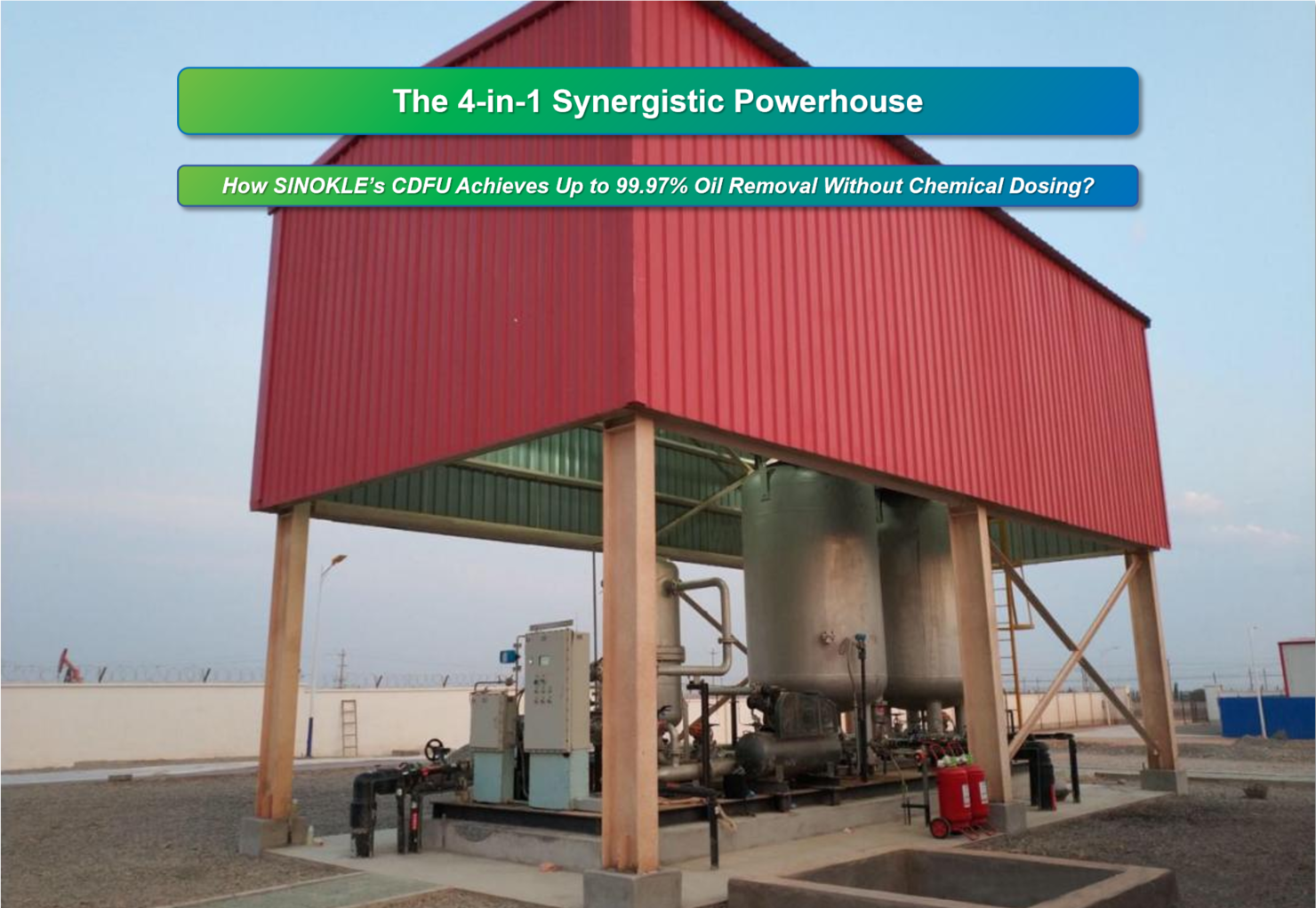
The 4-in-1 Synergistic Powerhouse: How SINOKLE’s CDFU Achieves Up to 99.97% Oil Removal Without Chemical Dosing
2026-08-05Addressing the complex compositions of industrial oily wastewater requires a multi-technology approach rather than a single isolated mechanism. Shenzhen Clear Science & Technology Co., Ltd (SINOKLE) achieves industry-leading treatment efficiencies through
-
-
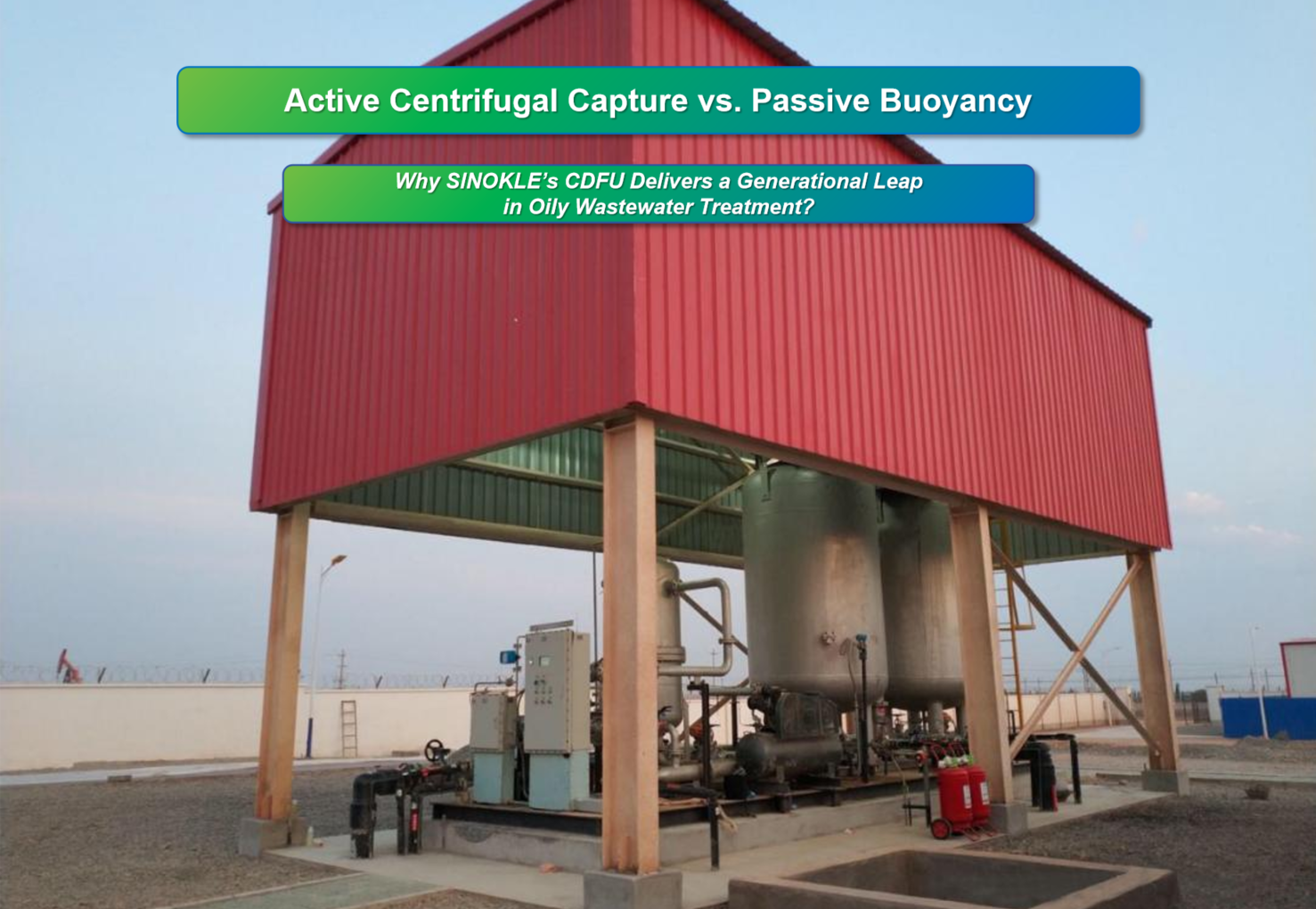
Active Centrifugal Capture vs. Passive Buoyancy: Why SINOKLE’s CDFU Delivers a Generational Leap in Oily Wastewater Treatment
2026-07-24Traditional Dissolved Air Flotation (DAF) relies on passive buoyancy under gravity, forcing long retention times (10–15 minutes) and massive footprints. Shenzhen Clear Science & Technology Co., Ltd (SINOKLE) re-engineers this process at the principles lev
-
-
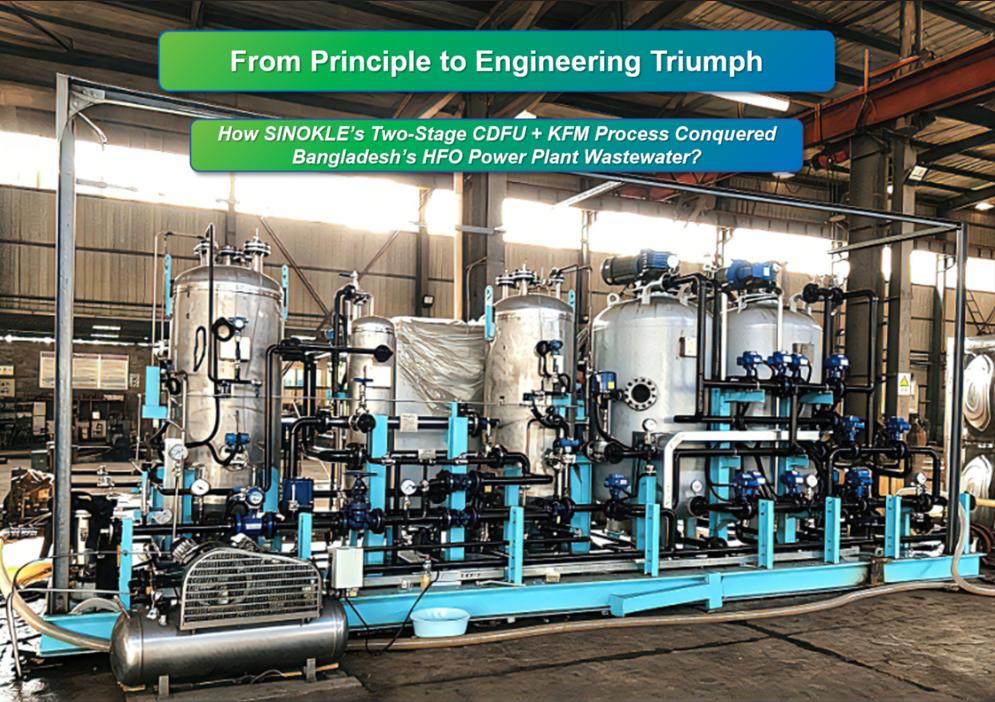
From Principle to Engineering Triumph: How SINOKLE’s Two-Stage CDFU + KFM Process Conquered Bangladesh’s HFO Power Plant Wastewater
2026-07-17Treating highly emulsified wastewater from heavy fuel oil (HFO) power plants is a universally recognized industrial challenge due to high oil concentrations (up to 2,000 mg/L) spanning vast oil droplet size distributions. In a textbook case study under Ba
-
-
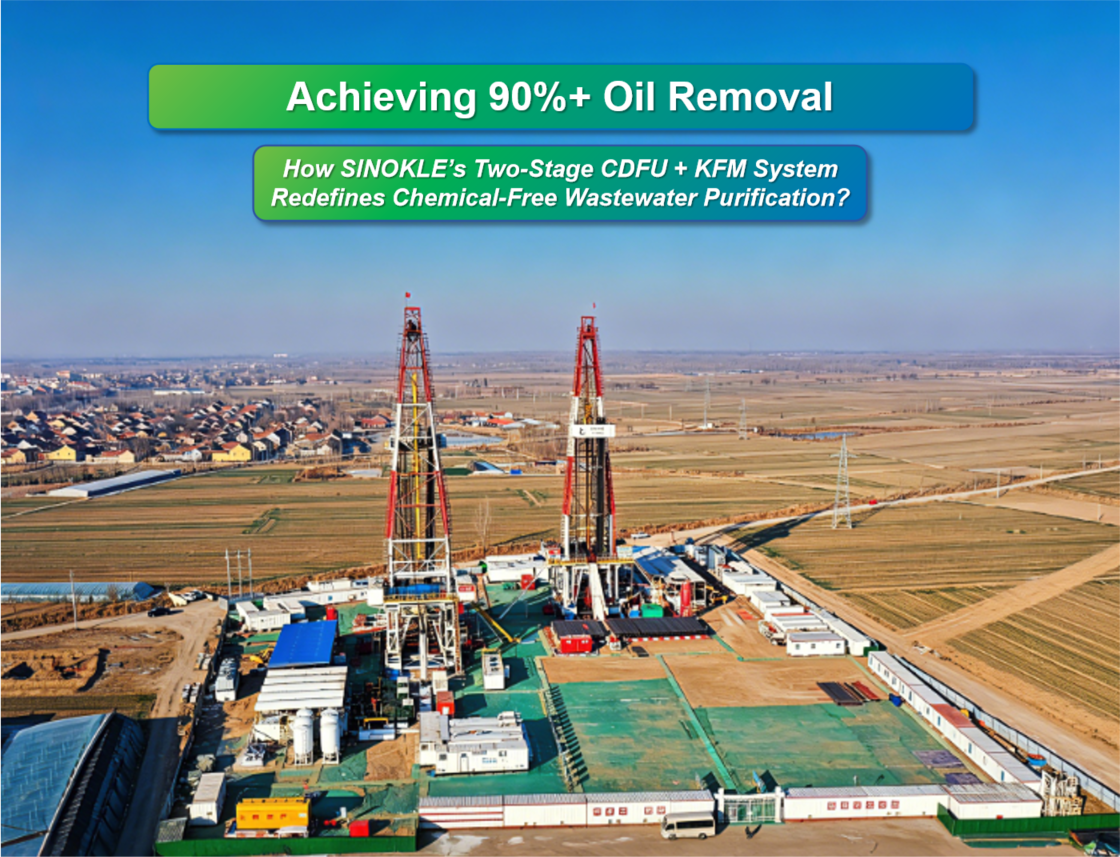
Achieving 90%+ Oil Removal: How SINOKLE’s Two-Stage CDFU + KFM System Redefines Chemical-Free Wastewater Purification
2026-07-10Managing complex oily wastewater in oilfields and petrochemical refining presents intense environmental compliance challenges. Addressing this industry-wide headache, Shenzhen Clear Science & Technology Co., Ltd (SINOKLE) developed an integrated, chemical
-
-
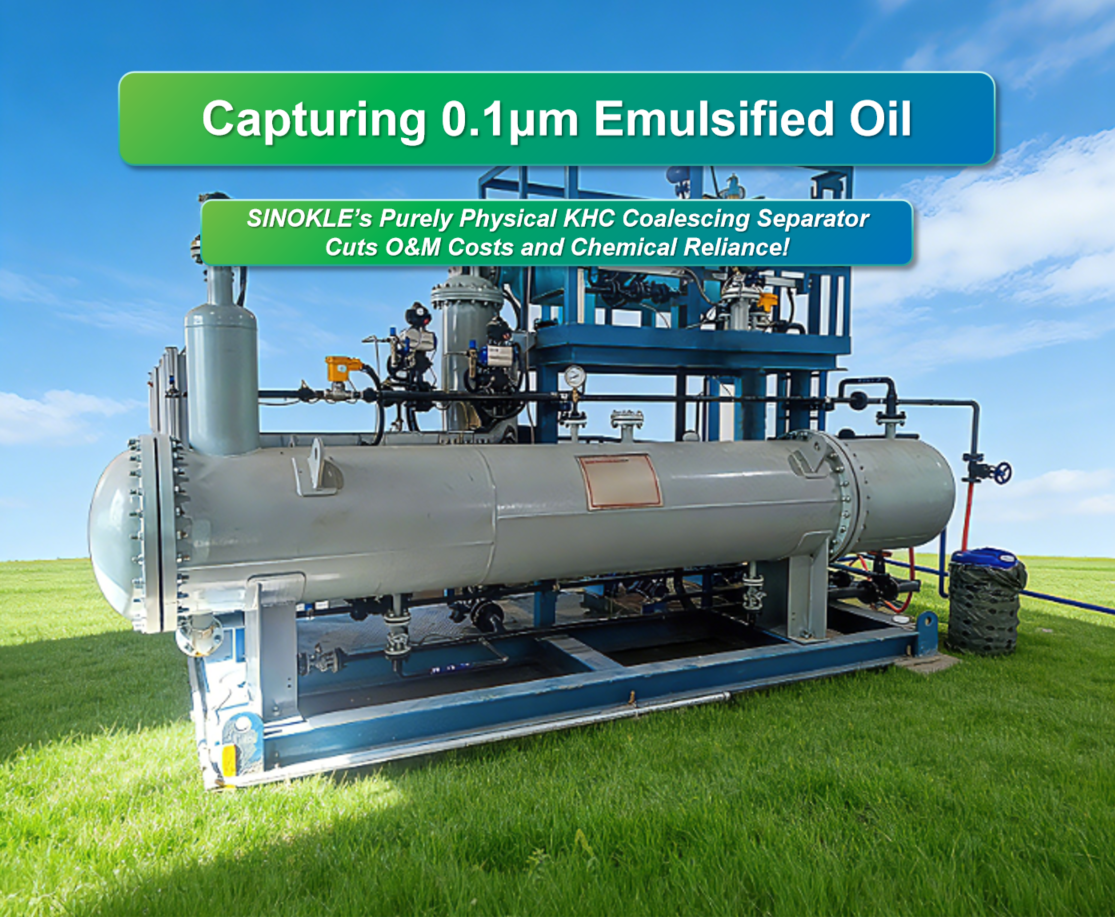
Capturing 0.1μm Emulsified Oil: How SINOKLE’s Purely Physical KHC Coalescing Separator Cuts O&M Costs and Chemical Reliance
2026-07-02The stable presence of micron-sized emulsified oil droplets (< 20μm) presents a notorious bottleneck in industrial wastewater pretreatment, where traditional gravity tanks fail and chemical demulsifiers spike hazardous sludge disposal costs. Directly addr
-
-
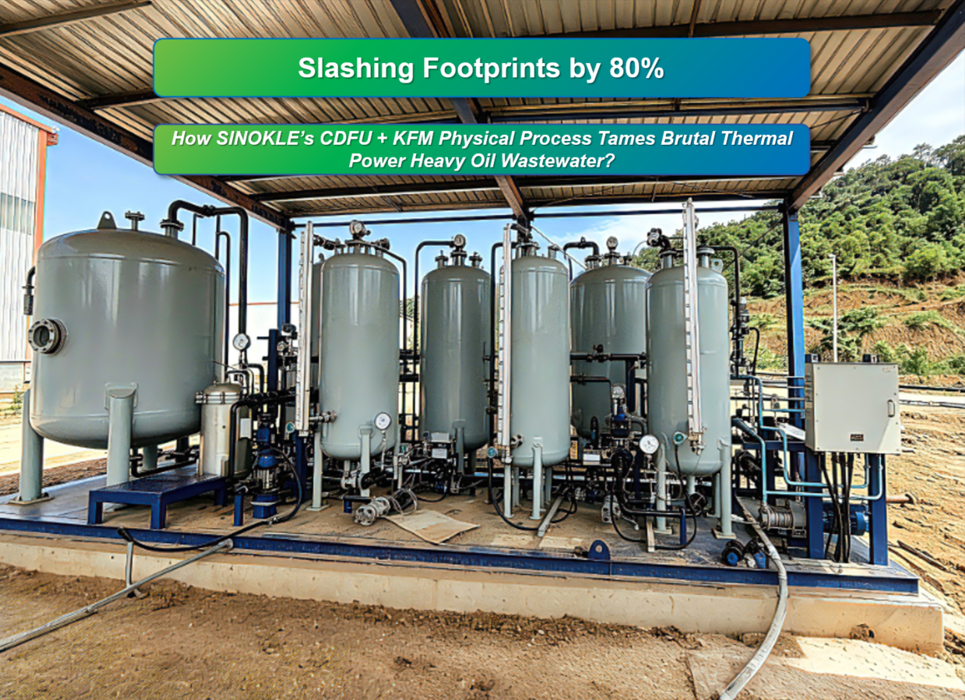
Slashing Footprints by 80%: How SINOKLE’s CDFU + KFM Physical Process Tames Brutal Thermal Power Heavy Oil Wastewater
2026-06-22Treating highly viscous, emulsified heavy oil tank farm wastewater (petroleum concentrations up to 1,000 mg/L) in thermal power plants poses critical environmental and operational risks. Traditional processes like API separators and chemical-dosing dissol