-
-
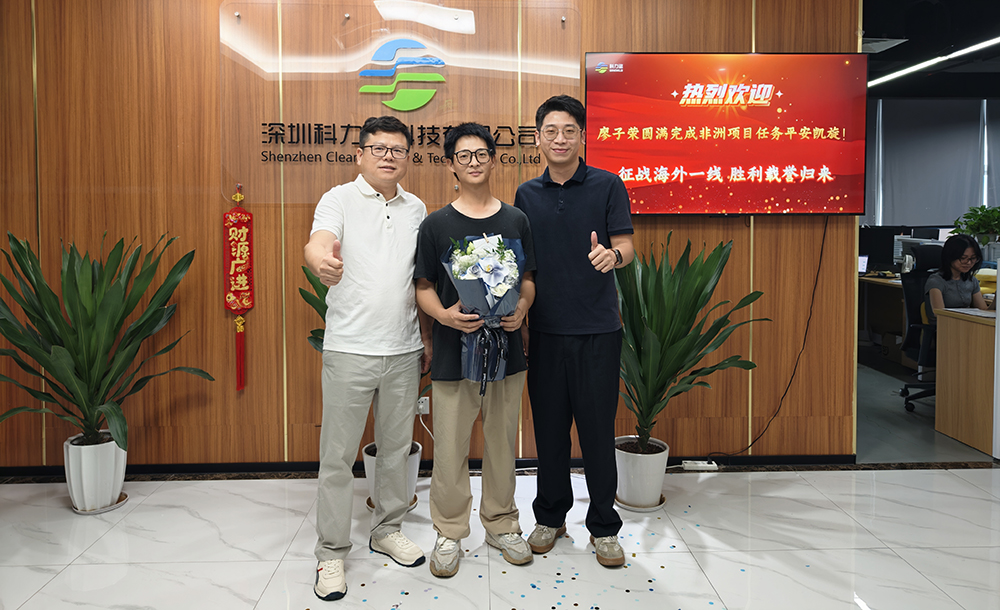
Homeward Bound with Honors: Sinokle Welcomes Back Its Overseas Frontline Warrior
2026-09-24After venturing across seas and mountains in pursuit of their dreams, our colleague has returned home safe and triumphant! Recently, Mr. Liao, an employee assigned to the oily wastewater treatment pro
-

-
Super-Gravity Cyclone Separation for Oily Wastewater: What the SINOKLE High-Efficiency Hydrocyclone Changes
2026-09-24How replacing gravity with a centrifugal field hundreds to thousands of times stronger reshapes oily wastewater separation: the CFD-optimised flow field, zoned parameter adjustment, non-powered operation without chemicals, skid-mounted deployment, and how
-
-
Aerobic Biological Treatment: the Operating Envelope, the Microbial Indicators and the Sludge Stages
2026-09-24The operating envelope for aerobic biological treatment: dissolved oxygen, pH, temperature, nutrients, toxicity and influent BOD5, plus what the BOD5/COD ratio tells you before design starts. Covers the three purification stages in the aeration tank, what
-
-
Phosphates in Water and Industry: Speciation, Production Routes and Why the Chemistry Drives Eutrophication
2026-09-24Why phosphate shows up as a fertiliser, a food additive, a refractory binder and a eutrophication suspect all at once. Covers the four protonation states, orthophosphate and condensed phosphate salt families, the thermal, wet and electrochemical productio
-
-
Anammox in the Treatment Plant: Cell Biology, Reactor Configurations and Reported Nitrogen Removal Rates
2026-09-24How anammox bacteria remove nitrogen without carbon or aeration: the anammoxosome and its ladderane membrane, the hydrazine intermediate pathway and the proton gradient that drives ATP synthesis, what each Candidatus species tolerates, and the nitrogen re
-
-
BOD5 as a Design Number: What the Five-Day Test Measures, and Where It Misleads
2026-09-24BOD5 is not a measure of how much organic matter is present - it is the oxygen a microbial population consumes under fixed conditions. Covers what the five-day test counts, the discharge tiers it is read against, why the BOD/COD ratio is the genuinely use
-
-
Ammonia Nitrogen: Why Speciation Decides Toxicity, and How the Two Laboratory Methods Compare
2026-09-24Why ammonia nitrogen speciation, not total concentration, decides toxicity: NH3 is the harmful fraction while NH4+ is comparatively benign, and pH and temperature set the balance. Covers the four nitrogen forms found in wastewater, the sources of high-amm
-
-
Biological Contact Oxidation: How to Size the Filler, Set the Air-Water Ratio and Keep the Bed From Clogging
2026-09-24A designer's view of biological contact oxidation: selecting honeycomb filler pore size from BOD5 and suspended solids, setting contact time, dissolved oxygen and air-water ratio, and understanding why direct and split-flow aeration produce very different
-
-
Activated Sludge Operation: Loading Rate, Aeration Geometry and the Choices Behind Stable Effluent
2026-09-24What governs an activated sludge plant: the two reaction stages inside the aeration tank, how F/M loading trades capital and operating cost against effluent quality, and how tank geometry and aeration hardware change the answer. Covers conventional, high-
-
-
Biofilm Reactor Selection: Film Thickness, Carrier Hydraulics and the Sloughing Cycle That Governs Performance
2026-09-24How fixed-film reactors actually work: the layered structure running from carrier to bulk water, why the aerobic film stays around 2 mm, the hydraulic loading thresholds that separate ordinary beds from high-rate ones, and why sloughing is a design variab