Ultrafiltration vs Nanofiltration vs Reverse Osmosis: A Clear Guide to Membrane Filtration
Understanding Membrane Filtration: Ultrafiltration, Nanofiltration, and Reverse Osmosis
Membrane filtration technologies—such as ultrafiltration (UF), nanofiltration (NF), and reverse osmosis (RO)—play a vital role in water purification, industrial processing, and even food and pharmaceutical production. Though they share similarities, each operates at different scales and serves distinct purposes based on what they can remove from water or other liquids.
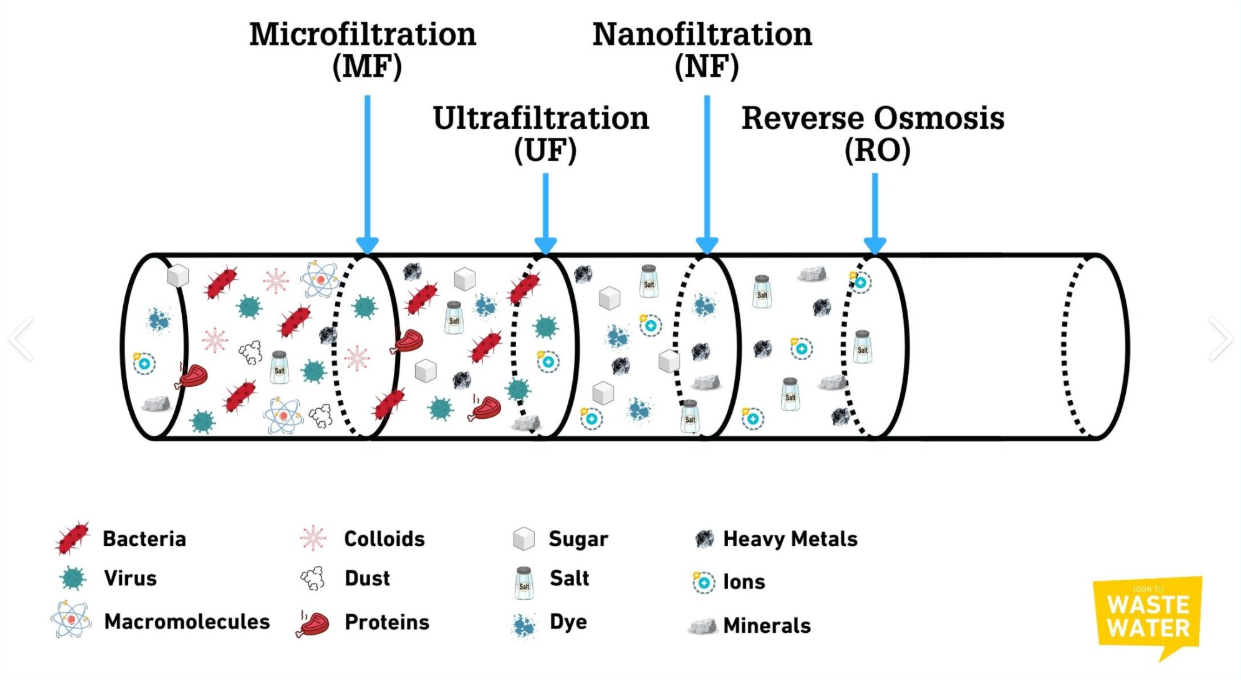
1. Ultrafiltration (UF)
Ultrafiltration uses membranes with pore sizes typically ranging from 1 to 20 nanometers (0.001–0.02 micrometers). It effectively retains large molecules such as proteins, colloids, bacteria, and high-molecular-weight organic compounds, while allowing smaller molecules—including salts, sugars, and water—to pass through.
Operating pressure: 1–5 bar
Applications: Pre-treatment for RO systems, clarification of beverages, wastewater treatment, and removal of microorganisms.
Limitations: Cannot remove dissolved ions (e.g., salts) or small organic molecules.
UF is often used when the goal is to remove suspended solids and microbes but retain mineral content—making it suitable for applications like washing water or, in areas with high-quality source water, even drinking water.
2. Nanofiltration (NF)
Nanofiltration sits between ultrafiltration and reverse osmosis in terms of filtration precision. NF membranes can reject particles as small as 0.001 micrometers (1 nanometer) and typically retain organic molecules with molecular weights between 200 and 800 Daltons.
Salt rejection rate:
-20%–98%, depending on ion type
-Monovalent ions (e.g., Na⁺, Cl⁻): lower rejection
-Divalent ions (e.g., Ca²⁺, Mg²⁺, SO₄²⁻): higher rejection
-Operating pressure: 3.5–30 bar
Applications:
-Softening groundwater (removing hardness ions like calcium and magnesium)
-Removing natural organic matter and color from surface water
-Partial desalination
-Concentration and purification in food and pharmaceutical industries (e.g., recovering valuable compounds)
Because NF removes fewer salts than RO but requires less energy and lower pressure, it’s a cost-effective choice when near-complete desalination isn’t necessary.
3. Reverse Osmosis (RO)
Reverse osmosis is the most precise membrane filtration method available. RO membranes can block nearly all dissolved salts and organic molecules larger than 100 Daltons, while allowing only water molecules to pass through.
Salt rejection rate: >99%
Operating pressure: Typically 15–80 bar (higher than NF and UF)
Applications:
-Seawater and brackish water desalination
-Production of ultrapure water for electronics and pharmaceuticals
-Drinking water purification (e.g., “purified” or “distilled” bottled water)
-Industrial boiler feedwater
-Wastewater recycling and specialized separations in chemical, food, and textile industries
RO is unmatched in removing contaminants like heavy metals, pesticides, and disinfection byproducts (e.g., trihalomethanes)—substances that UF cannot address.
Practical Considerations
Water quality standards: Regulatory limits for microbial content are stricter for RO systems (e.g., ≤20 CFU/mL) compared to UF systems (≤100 CFU/mL), reflecting RO’s superior purity.
Water usage: RO systems produce a "concentrate" or waste stream (brine), which is often reused for cleaning or irrigation. UF systems typically don’t generate significant waste and may provide potable water directly if source quality is good.
Cost vs. performance: While RO delivers the highest purity, NF offers a balanced compromise—effective softening and organic removal at lower operational costs. UF is the most economical for basic filtration needs.
Conclusion
Choosing the right membrane technology depends on your specific goals:
-Need to remove microbes and large particles but keep minerals? → Ultrafiltration
-Want to soften water, reduce color, or partially desalinate? → Nanofiltration
-Require the purest possible water, free from salts and chemicals? → Reverse Osmosis
These technologies are not competitors—they’re complementary tools in modern water and process engineering, each enabling cleaner water, safer products, and more sustainable industrial practices.